BiNA Office Furniture • Online Shopping • Call: 516-248-5858
BiNA Discount Office Furniture » Deals & Discounts »
Cubicles for your Office
Where Cubicles are Born: BiNA
Visit our showroom for office furniture samples, and start your design plan today
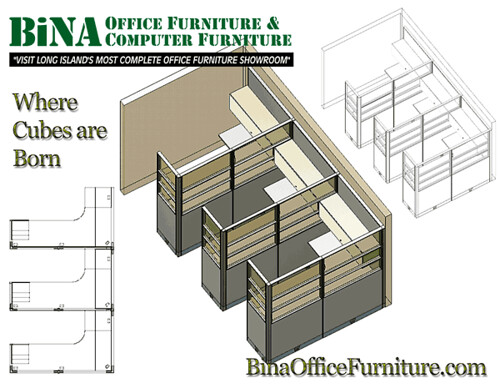
New York, Long Island, Your Office
We deliver and install everything we sell.
Labels: 516-248-5858, conference furniture, cubicle, design, long island, modular, new york, office furniture, office planning, office space
Win Big with our Racetrack Conference Tables
Start Your Engines
Gear up for your next meeting with a high quality conference table and chairs from BiNA Office Furniture
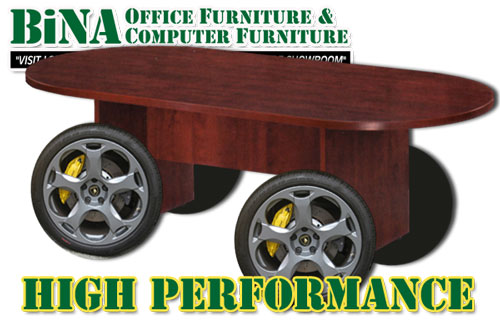
Keep Ahead of Your Competition
Get a great deal on any of our conference tables, available in many different sizes, shapes and styles (racing wheels not included!)
Visit Our Call to Order Online
For complete information about available sizes, styles and options of our conference tables and conference room chairs, visit our office furniture showroom here in Long Island, New York.
Labels: 516-248-5858, beauty, conference furniture, conference room, conference table, design, office furniture, office space, specials
We'll make your office space into your office place!
It's not an office until we furnish it
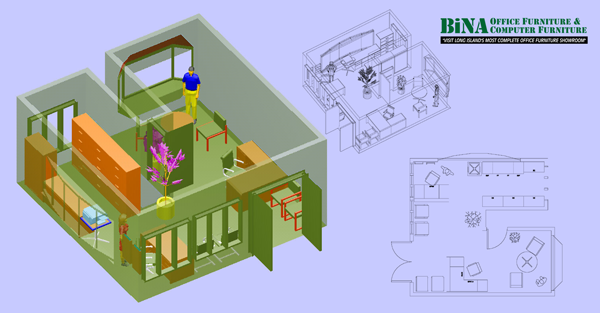
Visit BiNA Office Furniture's Long Island, New York showroom.
We'll take your office space and help you make it into your own office furniture place!
BiNA Office Furniture, http://BinaOfficeFurniture.com
image © 2009 binaofficefurniture.com
Labels: 516-248-5858, beauty, design, desk, executive desk, floor plan, furniture moving, home office, modular, new york, office planning, quality, reception desk, showroom, specials
@BiNA = Quality, Price, Service
There's an old engineering adage about project success, that given the tri-metric parameters of quality you could only chose two because the three terms compete, in a sort of “project triangle”
Yet given the scope of accountability you have for your business, you really DO need it all:
QUALITY - PRICE - SERVICE

and that's what you get from BiNA Office Furniture: Great Quality, Great Price and Great Service Because when it comes down to it, there's no other person we need to satisfy more than you, our next customer. Come to BiNA and understand our leadership in office furniture quality, service, price — ultimately yielding you total project VALUE.
image courtesy project triangle
Labels: 516-248-5858, bargain, design, discount, easy, inexpensive, quality, service, value
Your Prescription for Success? BiNA Office Furniture
No Surgery Needed
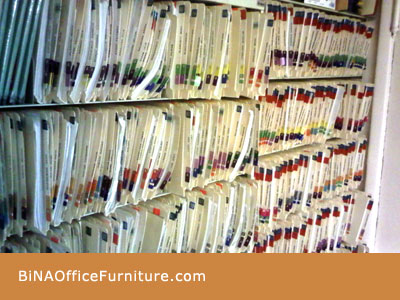
Bring BiNA Office Furniture in to heal your doctor office blues. We're able to help you plan out the best use of your waiting room space to maximize capacity and provide comfort for your patient visitors.
HIP-HIP-HIPAA
Keep your office in top-top health with HIPAA compliant medical patient filing for your records room. We work with you to get the best filing solution for your dollars.
Photo courtesy New York Medical Weight Loss Center
Labels: 516-248-5858, design, HIPAA, medical file, medical office, new york, ny, office planning, patient file, reception desk, waiting room
Customer Reviews of BiNA Office Furniture
BiNA Office Furniture 5-Star Reviews

“Exceptional Service: They outfitted our office at an exceptional price and most importantly provided great customer service. Two thumbs up!”

“We love our conference table!: Wow. What a great selection and so many nice options. The salesperson who helped us was so good and she also recommended many good chairs, we ended up getting some nice matching leather chairs too.”
“Huge HUGE showroom of office furniture. it was fun to browse and then work with one of the salespeople to get the details on the items we liked. it was easy then to decide - in fact we were able to choose all of our new office furniture in one shot! saved us a lot of effort and expense, and well worth the visit from Manhattan”
“Professional service: we've found bina office furniture to be the best for furnishing all of our locations. we've been using them for years and recommend them highly for anyone needing QUALITY office furniture and PROFESSIONAL sales staff.”
Labels: 516-248-5858, bargain, beauty, delivery, design, easy, executive desk, long island, showroom, waiting room
Make Sense, Save Dollars
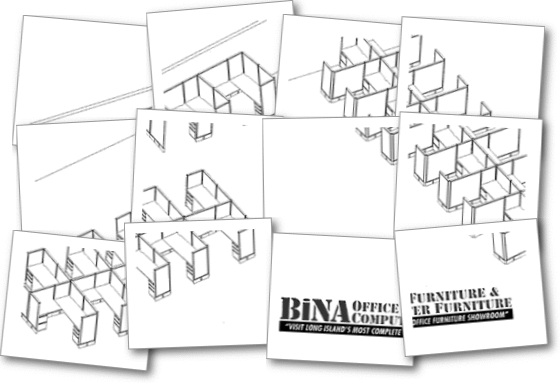
Got building?
We can help you make the most sense of your available office space & set your mind at ease. No use fretting over how to make the best use of your office furniture plans - just come on in and let our experts solve your space plans for you.Pencil sketch or Architect, it's all English to us!
No mysteries to unravel. No confusion at all. All we need is you and the approximate dimensions of your office space. We'll work with you right away to make it happen - the desk, cubicle or conference table you need. Suss out the reception desk and waiting room furniture too. We've got it all here, all we need is you to tell us what you need and when.It's that easy.
BiNA Office Furniture, Long Island, New York Showroom
Labels: 516-248-5858, conference room, delivery, design, discount, easy, floor plan, modular, ny, office planning, office space, waiting room
Pass GO! Get Great Cubicle Deals @BinaOfficeFurniture.com
GO! to BiNA for Bargain Cubicle!
Best Cubicle Value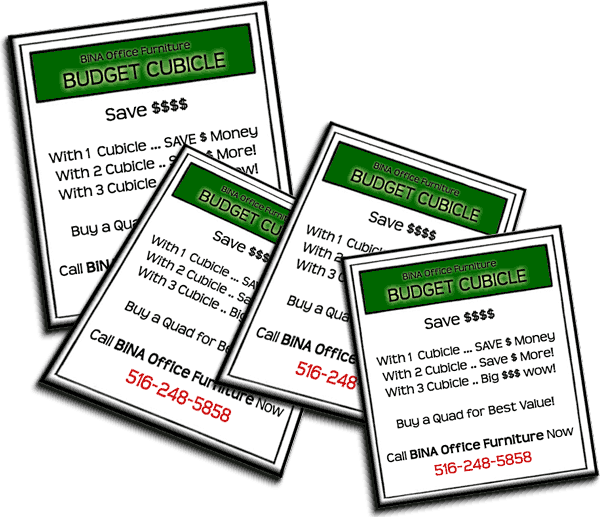
No need to buy cheap office cubicles or even used cubicles, when BiNA Office Furniture can provide you with brand new cubicles at budget bargain cubicle pricing. Why wait forever for a special sale, save NOW with our every day VALUE you get for shopping at BiNA Office Furniture Online in Nassau County, Long Island, New York.
Labels: budget, cubicle, design, discount, easy, long island, new york, office planning, office space, workstation
No Project Too Big for BiNA Office Furniture
Build a Bigger Office with BiNA
Bigfoot Interactive, Big Plans
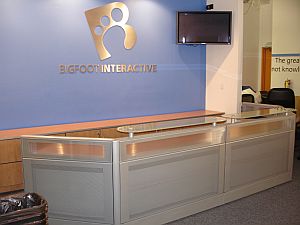 Bigfoot had big plans. Who did they call? BiNA Office Furniture.
Building out a big office space is a big job. You need to work with experienced experts whom you can trust to know how to do it because they've done it all before. Many New Yorkers come to BiNA because they know time and again we handle the big jobs and small with the utmost care to detail and with expert professionalism they rely on to get the job done right every time.
View Floor Plan
 Work with our team to design and build out your new or existing office space to meet your workspace and workplace requirements and budget. Our professional fleet installation is on the ready to bring you what you need when you need it.
Labels: beauty, cubicle, design, furniture moving, office planning, office space, quality
What can we design for you today?
Semi-custom office furniture is our speciality.
Call 516-248-5858 today for details or visit our showroom
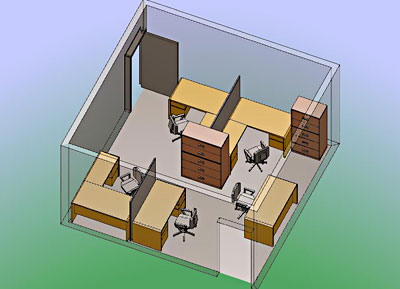 You need help planning out your office floor space, we can do that!
We're experts at making sure what you need is what you get, and what you get is what you need! No worries about how that conference table will fit into the room, or what size reception desk will work for you.
Can't find what you need anywhere?
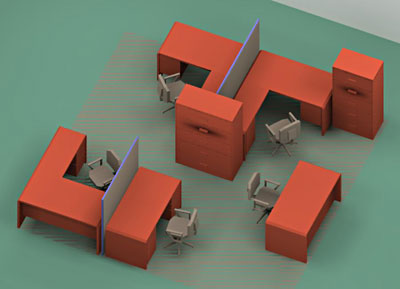 We can make it for you! Bring us your concept - size, shape, color, we can make your dream come true! and for a price equivalent to what your custom item would be if it were already in stock!
Labels: conference furniture, design, desk, easy, modular, office space, u-shape, workstation
Choose the Best Workstation for "U"
U-Shaped Workstations
Make the statement that is "U" — a U-Shaped workstation maximizes worksurface area and gives you the convenience of your office storage within easy reach.
We carry a variety of workstations for your personal style - whether a traditional desk series is for you, or something more contemporary, it's your U!
Workstations are available in wood series and laminate series in different colors and finishes. Make your selection to suit your available office space.
Bring in your floor plan or office space dimensions and work with our professional sales team to assemble the perfect workstation for your private office or corporate suite today.
Sample Configurations
There's no one way to make a U - they're available "left" and "right" sided in various sizes and styles. Different storage options too. It's a matter of style, and available office size. Visit our showroom for complete details on available options, styles, colors and sizes.
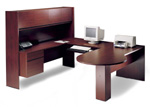
Mahogany U-Workstation with P Table and 4-Door Hutch
Grey with Silver, Post Leg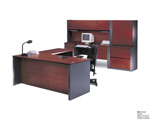
Cherry and Black with Recessed Front and Lateral File Cabinet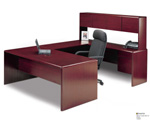
Rectangular Desk with Hutch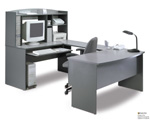
Gray with Bow Front and Keyboard Tray- Workstations Available in Various Styles and Finishes
and Budgets too!
Yes We Can! Delivery and Setup Available on Every Item We Sell 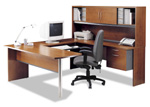
Light Finishes too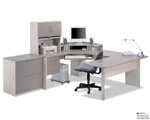
Workstation with Matching Lateral File Cabinet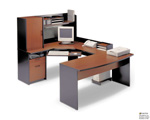
Other Workstation Configurations Available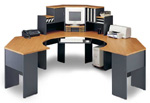
Semi-Custom Shapes Available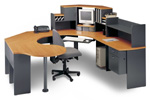
Bring Your Office Floor Plan and Work with Us Today- Visit Our Showroom for Complete Details on All Workstations
How To Arrange Your Furniture
Steps
1. Purpose
Determine what purpose the space the furniture occupies has and the purpose of each piece of furniture. This will have an effect on how space might be divided up and furniture arranged. Some furniture may not belong in a given space.- Primary Conversation Area:
- 8-12 feet in diameter is ideal
- Seats 4-6 people
- 8-12 feet in diameter is ideal
- Secondary Conversation Area:
- Seating for just 1-3 people
- Conference Area:
- Allow 3 feet from the table edge for the person to be seated at the table and room behind for traffic.
- Each person is allowed a minimum of 24 inches of seating room at the table.
2. Measure
Measure the room and write down its dimensions. Do the same for your furniture. Make a flat scale drawing of the room using graph paper as if seen from above. (EXAMPLE: 1 little square represents one quarter of a square foot [3"] and four of those equal one square foot.) You may want to shade the floor close to what is already there (beige if the carpet is beige) if there is a need to coordinate colors -just make sure you can see the lines on your graph paper.3. Draw Room
Draw flat scale drawings of your furniture as if seen from above. Don't get too detailed. At the very least you need the size and shape in relation to the room; Color the piece if you think it's important and then label it.4. Space Design Guidelines
Consider the following traffic flow / spacing guidelines:- Spaces that need 36"-6' clearance:
- Hallways
- In front of closets, file cabinets, and storage cabinets.
- Any route where two people might pass each other
- In front of counter or utility areas, e.g. photocopier, computer printer, fax machine.
- From the edge of a conference room table to a wall or stationary object.
- 4' or more for stairways.
- Hallways
- Spaces that need 18"-4'clearance:
- Between sofas & coffee tables
- 30" in routes where only one person will walk such as around private desk or through private doorways.
- There should be at least 30" of clearance in front of utility areas.
- Between sofas & coffee tables
5. Configure Room
Take your scale drawing of the room's floor plan and rearrange the scale drawn pieces of furniture on it until you see a configuration you like and think works best for the space and furniture's purposes and traffic flow. Tape the pieces down with small pieces of tape (so that you can easily move them if you change your mind) and begin preparing to move your furniture into that configuration.6. Moving Furniture
You have two options for moving the furniture:- Move everything out of the room
- Move pieces little by little.
7. Options
Regardless of your above choice the following steps are applicable:- Move the first piece to where you want it to go, and keep going from there.
- Move all the things outside your door back into your room.
Tips
- Clean the room before you move the furniture.
- Decide whether or not the furniture in the room should be kept. It should serve the room's purpose and be on the scale of the room -a small room should have small pieces of furniture and large room should have large pieces. If a large room cannot be filled with large pieces of furniture, divide the space up using the smaller pieces of furniture available arranged around / anchored by an area rug.
- Use a computer application such as Visio to help draw up your scale drawings.
- Area rugs not only work to bring color, texture and interest to a room but work as traffic flow guides and indications of transition from one area to another. Arrange furniture around or on top of area rugs. (A coffee table would be placed on top of an area rug, for example, and furniture arranged around that.)
- Clean the furniture before moving it back in place. It may be a long time before you bother to move that piece again for thorough cleaning.
- Vacuum or clean the floor afterwards.
- If you have wooden floors, put a piece of old carpet or a rag under each leg before you move an item of furniture; it will slide more easily and won't scratch the floor. Leave it there after you have finished to avoid damaging the floor.
- If you are moving pieces on carpet consider moving pads or placing pieces of cardboard or wood on the floor so that furniture slides more easily.
- Do not move furniture in a messy room!
- Be careful and do not move anything that is too heavy for you!
Warnings
Labels: design, floor plan, furniture moving, office space
How To Draw A Floor Plan to Scale

Draw a floor plan to scale for any room. Use cut out pieces of furniture at the same scale to plan various furniture layouts for the room. Decide on a layout before moving heavy pieces of furniture. Take the plan when shopping. The store design associate will help you decide on a new arrangement for furniture or counters.
Steps
- Use a graph pad where each square on the paper equals one quarter of an inch (four squares equal one inch) or create your own grid of equal squares on a blank sheet of paper
- Imagine each square represents one foot (12 inches)
- Measure the length of one wall with the tape measure
- Draw a line on the graph paper to represent this length of wall by counting the squares. For example: The wall is eight feet six inches long. Count out eight and a half squares.
- Measure the length of each wall around the room
- Measure the length of each door and window opening (without frames) from the corner of the closest wall and add to the drawing
- Draw windows as double lines and doors with a line and an arc
- Measure the length and widths of all built in fixtures such as counters and add to your plan
- Measure the length and width of each piece of furniture for this room with the tape measure
- Draw the furniture on another sheet of graph paper - the squares represent 12 inches
- Cut out the individual pieces of furniture with scissors
- Glue or tape the cut outs onto a piece of cardboard for weight
- Move the cut out furniture around on your plan to decide on a suitable arrangement
Things You'll Need
- Paper - graph pad – 4 squares to an inch
- Tape measure 16 ft. or longer
- Sharp pencil
- Scissors
- Cardboard
- Glue stick or scotch tape
Sources and Citations
Article provided by wikiHowLabels: cubicle, design, office space, workstation
Hate Your Office? Want A Change? We Can Help!
 All around the internet we hear about people with crazy offices and unmanageable office spaces. But you won't hear that from our customers! They love the quality work we do, and we'd love to help you plan your office to ensure you're getting the best value for your square footage and resulting workflow.
From your construction schematic, or rough pencil sketch (!) we can work with you to spec out the possible sizes available to you in the series of products you like. Our showroom is bursting with examples of find office cubicles, desks and chairs to suit every office environment, and every business budget.
Come into our showroom today and buy a better office now. What are you waiting for?
Labels: cubicle, design, new york, office space, workstation
Discount Office Furniture Specials
<< Office Furniture DiscountsHome
Cubicles for your OfficeWin Big with our Racetrack Conference Tables
We'll make your office space into your office place!
@BiNA = Quality, Price, Service
Your Prescription for Success? BiNA Office Furniture
Customer Reviews of BiNA Office Furniture
Make Sense, Save Dollars
Pass GO! Get Great Cubicle Deals @BinaOfficeFurniture.com
No Project Too Big for BiNA Office Furniture
What can we design for you today?
Choose the Best Workstation for "U"
How To Arrange Your Furniture
How To Draw A Floor Plan to Scale
Hate Your Office? Want A Change? We Can Help!
Discount Office Furniture Dealer metro New York City and Long Island, NY. Visit Long Island's Most Complete Office Furniture Showroom, today! Call BiNA Office Furniture 516-248-5858